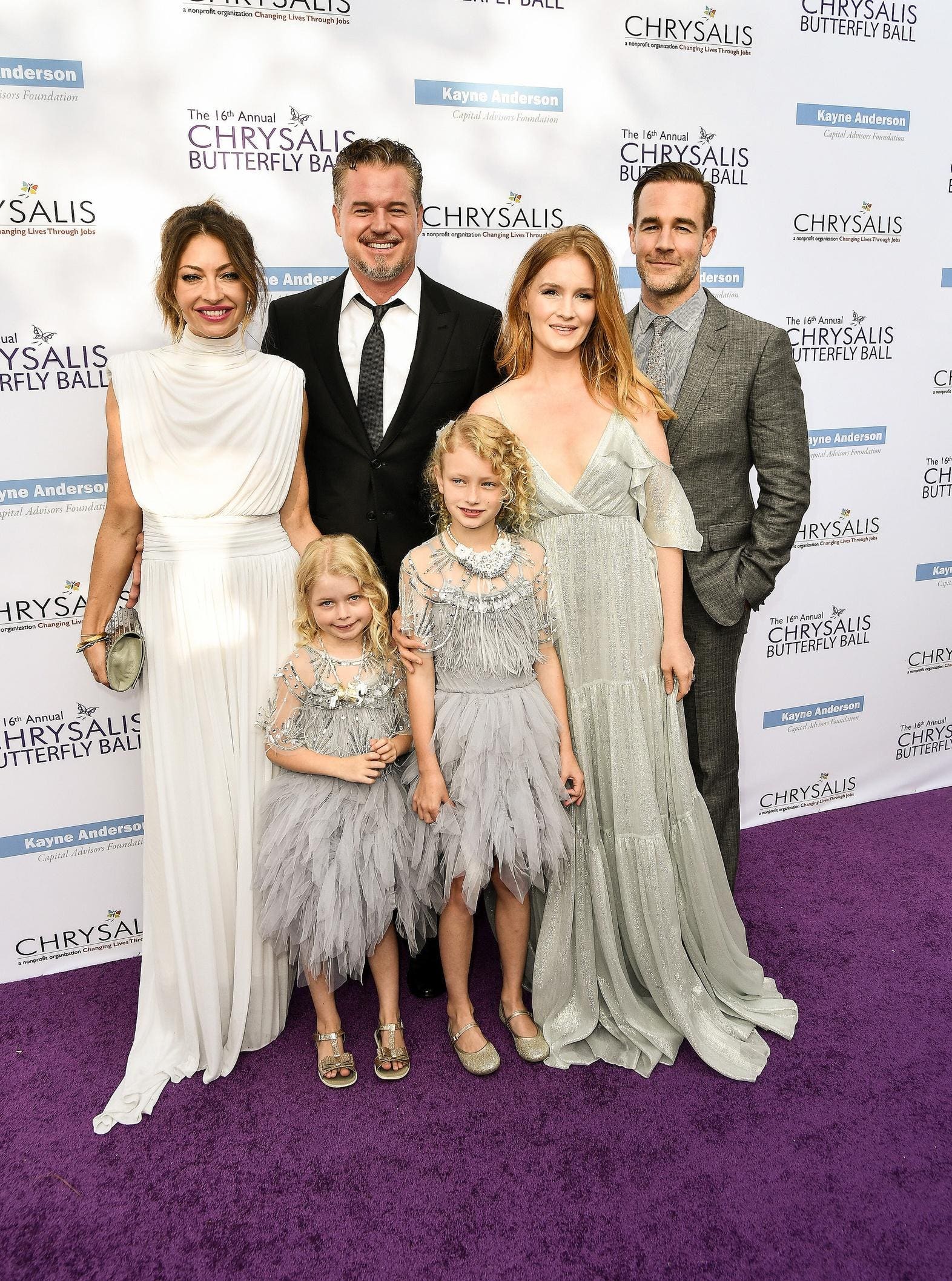

When people get sick in the United States, they often face not only illness but financial catastrophe. Nearly 1 in 10 U.S. adults — about 23 million people — carry medical debt. The recent deaths of actors James Van Der Beek from colorectal cancer and Eric Dane, who was battling ALS, highlight this reality.
Van Der Beek reportedly sold belongings to cover treatment, and his family’s GoFundMe campaign raised more than $2.7 million. While the tragedy of cancer is unquestioned, his campaign sparked debate and underscored the public’s capacity to offer both generosity and judgment toward those who crowdfund during medical crises.
Dane’s death on Thursday added to the intensity of online debates over celebrity crowd-funding campaigns, as his friends set up a GoFundMe page for his wife and daughters that has raised more than $418,000 of its $500,000 goal as of late Monday afternoon.
For over a decade, GoFundMe has served as a public ledger of financial ruin. Health-related campaigns remain the platform’s largest category, a visible record not just of financial need but of how communities mobilize when disease or injury disrupts life.
I spoke with GoFundMe CEO Tim Cadogan about what crowdfunding reveals about humanity: our ability to share and build, our struggle to overcome guilt and shame and our human tendency to judge and bemoan.
Who Turns to GoFundMe for Medical Costs — and Why?
Ari Romeo
“Health-related fundraising has always been our number one category,” Cadogan said.
The circumstances driving campaigns are often concrete: a cancer diagnosis, debilitating traumatic injury or a progressive auto-immune condition. When debt isn’t directly from medical bills, it stems from the domino effect of a life upended by illness: funeral costs after an unexpected death or childcare expenses when the sick or injured person can no longer provide care.
Cadogan dispels the assumption that health-related campaigns are primarily for the uninsured or low-income. These campaigns, he shared, are launched by anyone who finds themselves facing untenable out-of-pocket costs. “Gaps in coverage compound quickly,” he says.
The onboarding required to launch a GoFundMe campaign prioritizes privacy, convenience and agency. Users are not asked to disclose their gender, race, insurance status or bank statements. While the platform has terms of service, its goal isn’t to screen who is worthy of support or community. Cadogan’s aim is to provide the opportunity to fundraise and allow anyone who meets minimal requirements to participate.
Why Is It So Hard to Ask for Help When We’re Sick?
GoFundMe has enabled more than $40 billion of help for communities across the globe. For many, giving comes naturally. But, as Cadogan notes, “asking for help does not.” Launching a fundraiser often requires sharing intimate details with a wide audience. One must be receptive to vulnerability and be able to contend with guilt and shame.
To understand why asking for help can feel so psychologically fraught, I spoke with Dr. June Tangney, professor of psychology at George Mason University. She clarified a fundamental difference between guilt and shame. Guilt focuses on behavior, while shame targets identity. “I did a stupid bad thing versus I am a stupid bad person,” she explains.
Tangney notes that guilt often arises from comparison of behavior. A person might feel guilty if they accepted $100 from a GoFundMe while a friend in the same situation did not have one. “People with guilt feel they have unfairly benefited,” she adds.
If a person feels that their need reflects a personal flaw — cancer, mental illness, unemployment — “they feel that flaw has marked them in a stigmatizing way,” Tangney says, “that causes shame.”
To ease some of the guilt and shame associated with asking for help, Cadogan explains that many campaigns are started by friends or family members.
The initial guilt and shame often dissolves once the emotional support from contacts and strangers begins to form. “Families often say that emotional support — the messages, comments and visible affirmation — matters as much as the money,” says Cadogan.
Where Does the Judgment from the Public Come from?
If you look at the public response to any high-profile GoFundMe campaign, generosity and judgment often coexist in the same comment section. Much of that reaction stems from distance: when people lack context, they fill the gaps with assumptions. Commenters speculate about a person’s wealth, spending habits, savings, motives and whether they are truly deserving of support.
As GoFundMe does not determine who is “deserving,” the platform is intrinsically democratic: people give if they want to and don’t if they don’t want to. There are guardrails that address fraud, misuse and prohibited content, but none governing perceived worthiness. “That decision rests with the community,” says Cadogan.
The harder question may be cultural rather than procedural: Why are we so quick to judge someone else’s need?
Guilford Press
Tangney suggests that judgment is deeply rooted in how societies maintain order. “If we didn’t have agreed-upon rules for behavior, it would be a chaotic, mess,” she says. “We just know that you drive in this country on the right side of the street. There’s nothing wrong with the left side of the street.” These shared conventions create predictability. Predictability creates safety. If in your mind, a doctor, lawyer, actor or CEO should be financial stable, then it feels rule violating to see them ask for help. “We end up judging each other because these agreed-upon conventions are so important,” Tangney shares.
Judgment, then, may be less about cruelty and more about norm enforcement, especially when resources feel scarce.
“One of the issues around shame and guilt is this belief in the world as a zero-sum game,” says Tangney. With this belief, people see crowdfunding campaigns and think, “there’s only so much to go around.” If someone who should be wealthy enough to care for themselves can’t, they might be perceived as taking resources from someone else. “We as a collective group can open our hearts and be giving. There’s more that goes around. It doesn’t necessarily take something away from somebody else.”
She offers a simple reframing for those feeling judgment arise: “What would I say to my best friend who had the same need. Oh, maybe I would think about it differently then.”
When Illness Becomes a Financial Crisis: What Does That Say About the System?
It is impossible to talk about medical crowdfunding without confronting a harder question: What does it mean that millions of families must fundraise for care?
Cadogan does not describe GoFundMe as a solution to systemic gaps in healthcare. He frames it instead as a complementary response, a tool people turn to when they are left to navigate significant financial strain on their own.
GoFundMe is nonpartisan by nature; medical debt cuts across demographics and political lines. Still, a platform that bears daily witness to the financial consequences of illness holds a unique vantage point. There may be room, and perhaps responsibility, for such a voice to engage policymakers in conversations about reform that would benefit everyone.
At the end of my discussion with Cadogan I was left wondering, is GoFundMe a tech company? A charitable tool? A community builder? Perhaps it is all three. But one truth feels certain: GoFundMe exists because generosity exists. And, between judgment and generosity, most people choose to give.
Updated Feb. 23: This article was updated to note the increased online debate over celebrity crowd-funding campaigns after Eric Dane’s passing.